The 30-Second Version
5S starts with energy and ends with frustration in many factories. Not because people resist discipline — but because systems aren't ready. This story explains why visual order without stability becomes cosmetic. And what makes 5S actually sustain.
In many factories, 5S begins with enthusiasm.
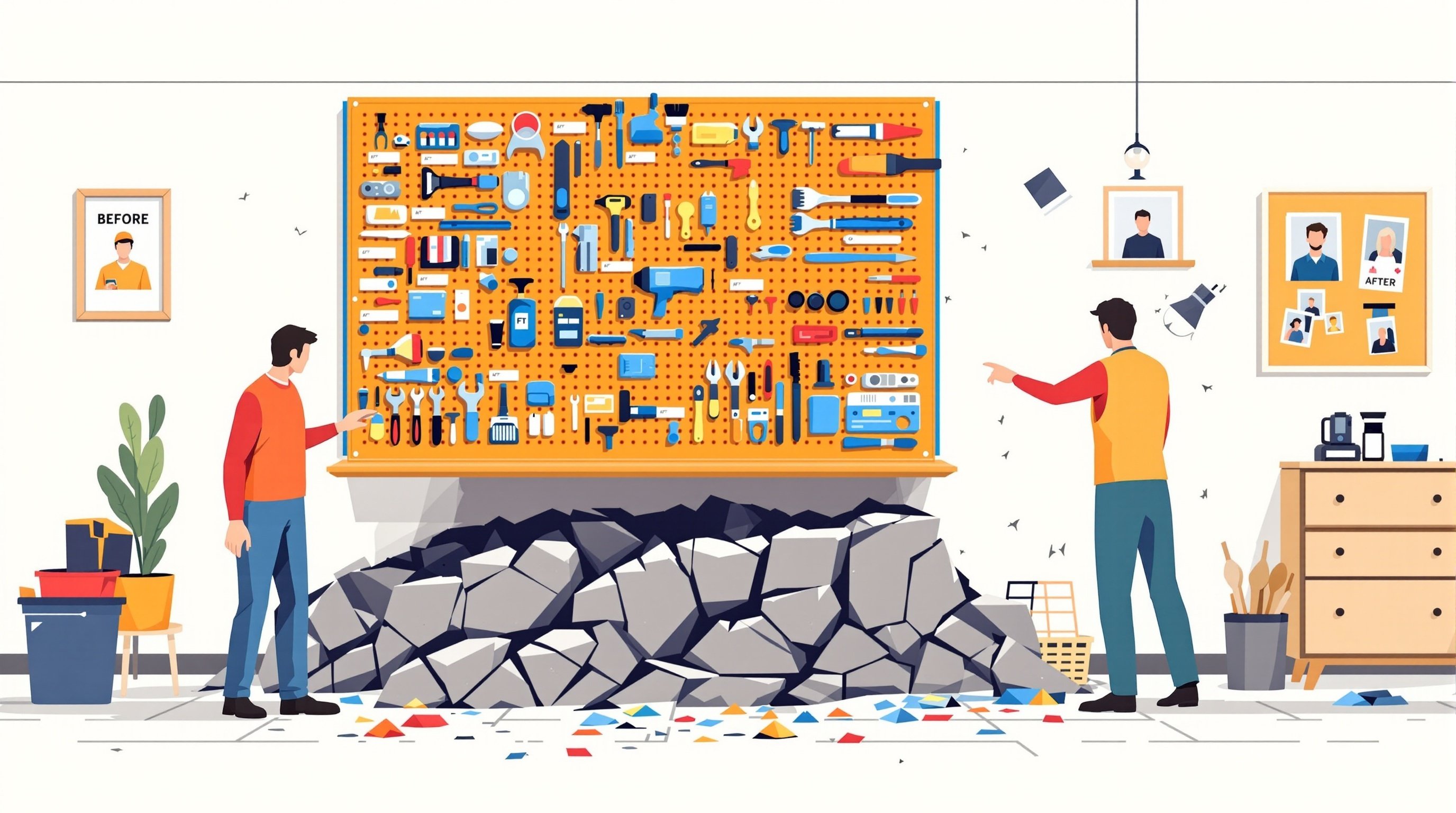
Floors are cleaned.
Tools are labelled.
Red tags appear.
Before-and-after photos circulate proudly.
For a few weeks, things look better.
Visitors notice.
Management feels progress.
Teams feel watched.
And then, slowly, something happens.
Labels peel off.
Tools drift back to old places.
Red tag zones fill up and stay filled.
Audits become ritualistic.
Within months, the factory looks almost exactly the way it did before.
And the conclusion is usually quick and convenient:
"People don't have discipline."
"Culture is the problem."
"We need stricter audits."
But that's not the real reason 5S fails.
What 5S Was Never Meant to Be
5S was never meant to be a cleanliness drive.
It was designed to solve a very specific problem:
How do we make abnormal conditions visible, immediately?
The purpose of labels, locations, and markings is not order.
It is signal.
When something is missing, misplaced, or excessive, the system should make it obvious — without supervision.
When that doesn't happen, 5S quietly turns into decoration.
The Familiar Pattern
In one SME factory, leadership proudly rolled out 5S across all departments.
Audit scores were tracked.
Departments competed.
Charts were displayed.
But operational problems didn't reduce.
Search time remained high
Breakdowns didn't reduce
Quality issues persisted
Firefighting continued
On closer observation, the issue was clear.
The shopfloor looked organised —
but work itself hadn't changed.
Processes were still unstable.
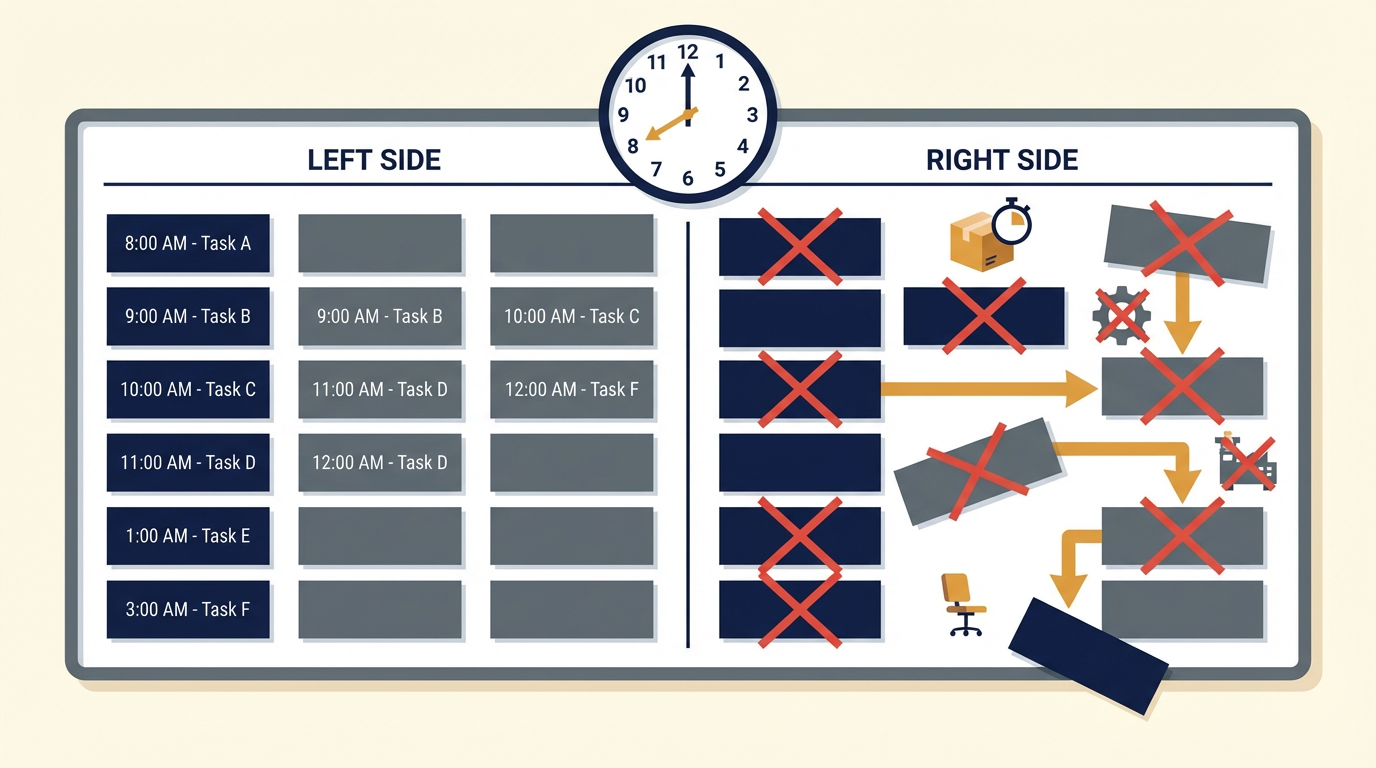
Schedules still shifted daily.
Tools were moved because priorities changed, not because people were careless.
5S was being asked to compensate for system instability.
It never can.
When 5S Becomes Cosmetic
This is where most implementations quietly fail.
5S is applied:
Without stable processes
Without standard work
Without clarity on flow
Without ownership of abnormalities
So teams are asked to "maintain order"
in an environment that changes every few hours.
Over time, people stop taking it seriously.
Not because they don't care —
but because the system contradicts the rules it enforces.
What Actually Works
In factories where 5S sustains, something else is always present.
Work sequences are stable
Roles and responsibilities are clear
Abnormalities are discussed daily
Leaders respond when signals appear
5S then becomes a supporting mechanism, not the main act.
It helps:
Reduce searching
Improve safety
Highlight deviations
Support problem-solving
Not by force — but by relevance.
The Lean Angle
What can Indian SME owners learn from this?
1. 5S doesn't create discipline It reveals whether discipline already exists.
2. Visual order cannot compensate for unstable systems If priorities change daily, layouts will too.
3. Audits don't sustain behaviour Daily use does.
4. 5S is a means, not a transformation Treating it as the end guarantees disappointment.
The Bigger Lesson
Here's to fewer posters and stronger systems.
If this made you pause or rethink something, pass it on to a fellow operator, plant head, or business owner. Inspiring stories are meant to be shared on WhatsApp, LinkedIn, or wherever good ideas travel.
Share this story: