The 30-Second Version
Culture isn't what's written on walls. It's what happens on a bad day. This story explains why culture keeps overriding strategy in SMEs. And how Lean thinking cultures are built — by design, not hope.
Most SME leaders don't ignore culture.
They talk about it often.
They invest in it occasionally.
They worry about it constantly.
And yet, when transformation efforts stall, the explanation sounds familiar:
"The strategy was right... but the culture wasn't ready."
It's an easy conclusion to reach.
It's also incomplete.
Because culture doesn't resist strategy.
It reveals whether the system supporting that strategy is real or imagined.
What Culture Really Is (and Isn't)
In factories, culture is often treated like a soft variable.
Something to be influenced through:
Posters
Town halls
Training sessions
Motivational speeches
But culture doesn't live in words.
It lives in what happens on a bad day.
When a plan is missed
When quality slips
When a machine fails
When a customer escalates
Do people hide problems — or surface them?
Do leaders blame — or ask why?
Do systems adapt — or do people absorb the shock?
That is culture.
Why Strategy Keeps Losing
Most SME strategies are sensible.
Improve productivity.
Reduce cost.
Stabilise quality.
Scale responsibly.
The problem is not direction.
The problem is translation.
Strategy is usually discussed monthly.
Culture is experienced daily.
So when:
Firefighting is rewarded
Bad news is punished
Deviations are normalised
Learning is postponed
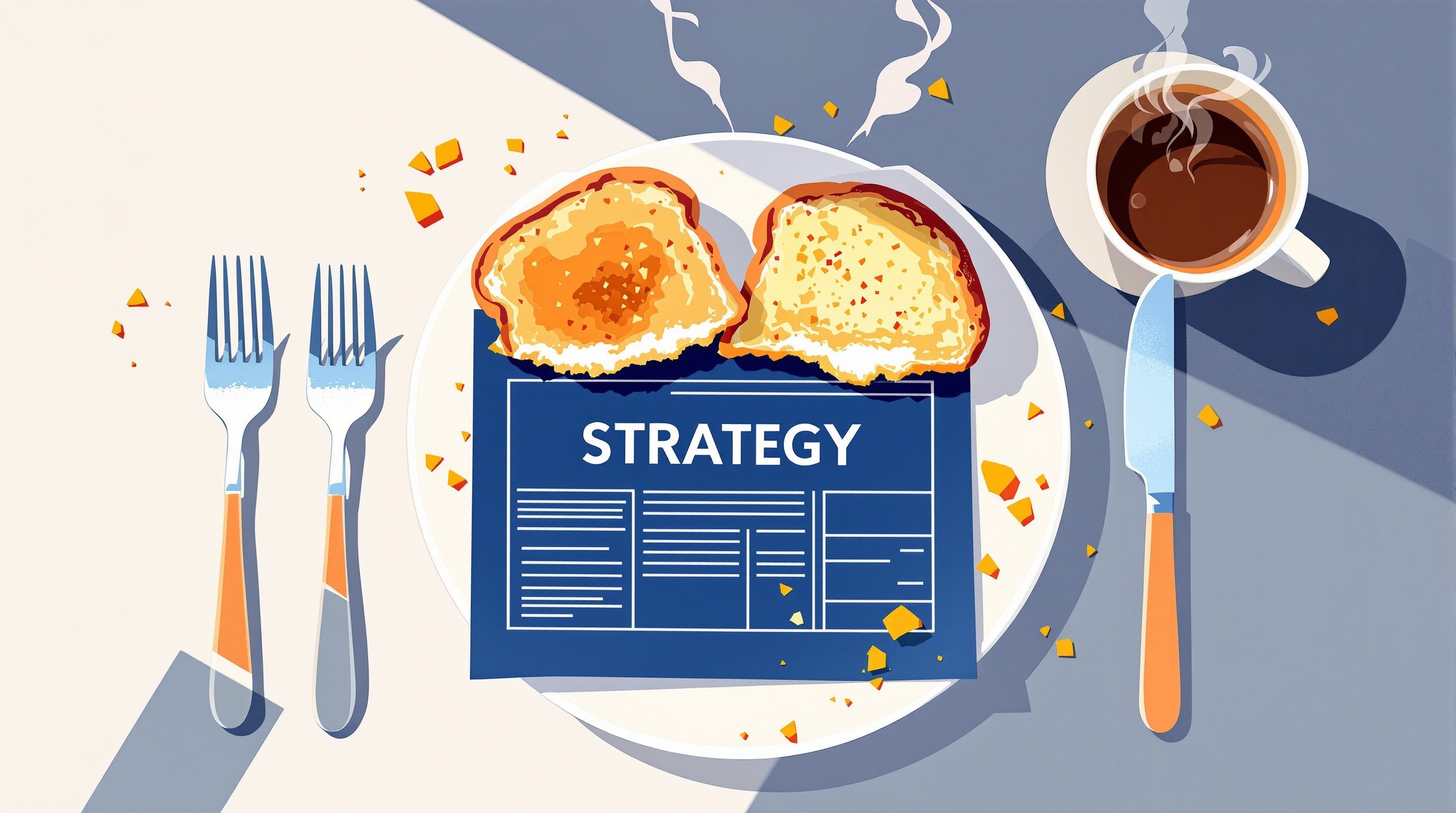
Culture quietly overrides strategy — every morning before breakfast.
The SME Reality
In one factory, leadership rolled out a clear Lean roadmap.
Daily reviews were introduced.
KPIs were defined.
Improvement targets were communicated.
On paper, everything looked aligned.
But on the shopfloor:
Supervisors still solved problems privately
Operators avoided escalating issues
Meetings focused on output, not causes
Nothing had changed where it mattered most — daily behaviour.
The strategy hadn't failed.
The operating system hadn't changed.
How Culture Actually Forms
Culture is not built through alignment sessions.
It is shaped by repeated signals.
What gets reviewed daily
What gets ignored
What leaders ask about — and what they don't
Which problems get time, and which get bypassed
Over time, people learn what is safe, not what is said.
And they act accordingly.
Lean Thinking vs Lean Tools
This is where many SMEs get confused.
They adopt Lean tools —
but don't change Lean thinking.
5S exists, but abnormalities aren't discussed.
DPRs exist, but deviations aren't acted upon.
Standards exist, but exceptions are routine.
So culture drifts back to:
"Do what it takes to survive the day."
Not because people don't care —
but because the system demands it.
The Lean Angle
What can Indian SME owners learn from this?
1. Culture is an outcome, not an input You don't "fix" culture. You redesign the system that produces it.
2. Daily routines shape beliefs What happens every day matters more than what is announced quarterly.
3. Leaders are cultural architects Not by speeches — but by what they consistently tolerate.
4. Lean thinking lives in problem response How problems are handled teaches people how to behave.
The Bigger Lesson
Here's to cultures built by design — not hope.
If this made you pause or rethink something, pass it on to a fellow operator, plant head, or business owner. Inspiring stories are meant to be shared on WhatsApp, LinkedIn, or wherever good ideas travel.
Share this story: